1. Intro: Why thermostat settings matter
1. Intro: Why thermostat settings matter
In South Florida, air conditioning is not just for summer; it is part of daily life for most of the year. The thermostat becomes the “brain” that determines how often the system runs, how well it manages humidity, and how high the power bill climbs. A few degrees on that wall can easily add up to hundreds of dollars per year, especially in homes with older or oversized equipment that already works harder than it should.
Unlike dry climates, comfort in South Florida is less about the exact air temperature and more about the combination of temperature and humidity. A home set a little warmer but kept drier often feels better than a cooler, clammy house. Choosing the right thermostat settings means finding that balance where the system runs long enough to remove moisture but not so much that it wastes energy.
2. Key principles for South Florida comfort
Before getting into exact numbers, it helps to understand the basic principles behind good thermostat use in a hot, humid climate.
Comfort is a mix of temperature and humidity. If indoor humidity stays high, the air feels heavy and sticky even when the thermostat reads a “reasonable” temperature. The goal is to encourage steady, moderate run times that pull moisture out of the air instead of very short bursts that only drop temperature.
Small changes have big impacts. In typical homes, a change of just a couple of degrees on the thermostat can noticeably affect both comfort and monthly bills. Moving the setpoint one or two degrees higher during cooling season usually has a much smaller impact on comfort than people fear, especially if ceiling fans are used correctly.
Consistency beats constant fiddling. Constantly changing the thermostat up and down several times a day forces the system to work harder with less predictable results. A thoughtful schedule that stays relatively consistent is easier on the equipment and keeps the house in a comfortable band instead of swinging from hot to cold.
These principles guide the recommendations that follow, and they can be adapted to each household’s tolerance for warmth, humidity, and cost.
3. Recommended cooling setpoints
For most South Florida homes, the cooling season is essentially “most of the year.” The key is separating daytime “at home,” nighttime, and “away” settings and then adjusting a degree at a time to taste.
Daytime “at home” settings
During the day when people are active, a moderate cooling setpoint works well in most homes. Many households find a range in the mid‑70s to be a good starting point. In this band, the system can keep up with the high outdoor heat and humidity without running non-stop or leaving the air feeling damp. If the home has good ceiling fans in main rooms, the thermostat can usually be set a degree or two higher because moving air makes people feel cooler.
The best approach is to pick a starting number in that mid‑70s range and live with it for several days before deciding whether to go cooler or warmer. Abruptly cranking the thermostat down to much lower numbers will not cool the house faster; it only forces the system to run longer and may lead to overcooling certain areas without doing much for humidity.
Nighttime settings
At night, the body naturally cools down and many people prefer a lower temperature for sleeping. A drop of one to three degrees from the daytime “at home” setting is usually enough for most households to sleep comfortably. In very humid stretches or for people who run bedroom ceiling fans, keeping that nighttime setpoint only slightly cooler than daytime helps the system maintain even humidity without creating cold, clammy conditions.
If family members wake up feeling cold or congested, the nighttime setting is likely too low, or humidity is not being removed effectively. In that case, raising the thermostat slightly and using fans for gentle air movement usually provides a better balance.
“Away” settings
For hours when no one is home—workdays, school days, or short trips—the thermostat can be set several degrees higher than the normal “at home” temperature. In South Florida, the goal is to reduce energy use without letting the house heat up so much that it feels like a sauna when everyone returns. A reasonable strategy is to increase the setpoint by three to five degrees during “away” periods, then have a programmable or smart thermostat begin cooling again 30–45 minutes before occupants return.
For longer vacations of several days or weeks, especially in the hottest months, the thinking changes slightly. The house still needs some cooling and dehumidification to prevent moisture problems, but it does not need to stay as cool as if someone were inside. A moderate, higher setting combined with any built‑in humidity control features keeps humidity from climbing while still cutting consumption.
4. Mild winter settings in South Florida
Even in South Florida, there are times in winter when heating comes on—especially at night or in older, draftier homes. In many houses, the primary system is a heat pump, which operates differently from a gas furnace.
For most families, a comfortable winter daytime heating setpoint falls in the upper 60s to low 70s, depending on personal preference. Because winters are typically brief and mild, aggressive heating is rarely necessary. Overheating the home not only wastes energy but can also dry the air out more than needed, even in a naturally humid climate.
At night, dropping the thermostat a few degrees usually works well when combined with appropriate bedding. In homes with heat pumps, it is important to avoid large, frequent changes in the heating setpoint. Big jumps can trigger the more expensive auxiliary or emergency heat to come on, which raises power usage dramatically. Gentle adjustments of one or two degrees at a time are safer and more economical.
5. Humidity control and indoor air quality
Because South Florida’s outdoor air is so warm and moist for much of the year, humidity management inside the home is just as important as the actual temperature. Poor humidity control can lead not only to discomfort but also to musty odors, condensation on windows, and potential mold issues.
The thermostat and HVAC system share responsibility for humidity control. Longer, steady cooling cycles allow the evaporator coil to remove more moisture from the air, while very short bursts mostly change temperature. If the home feels consistently sticky even at cooler settings, that is often a sign of an oversized system, restricted airflow, or significant air leaks rather than a thermostat problem.
Homeowners can support better humidity control with a few habits:
Avoid extreme thermostat setbacks that let the home heat up heavily and then force the system to run hard to catch up, as this can increase humidity swings.
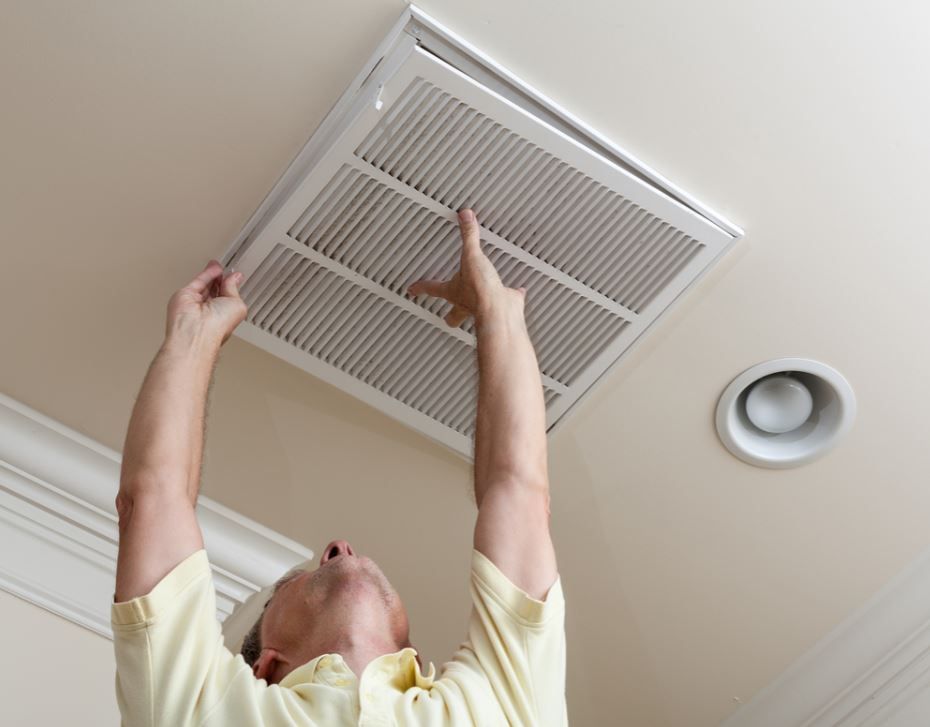
Make sure return grilles and supply vents are not blocked by furniture, rugs, or curtains so the system can move enough air through the coil.
Use bathroom and kitchen exhaust fans while cooking and showering to remove moisture at the source.
In some cases, a whole‑home dehumidifier or system adjustments may be needed if humidity remains high despite reasonable thermostat use. A well‑tuned system paired with sensible settings keeps indoor relative humidity in a comfortable, healthy range most of the time.
6. Programmable vs. smart thermostats
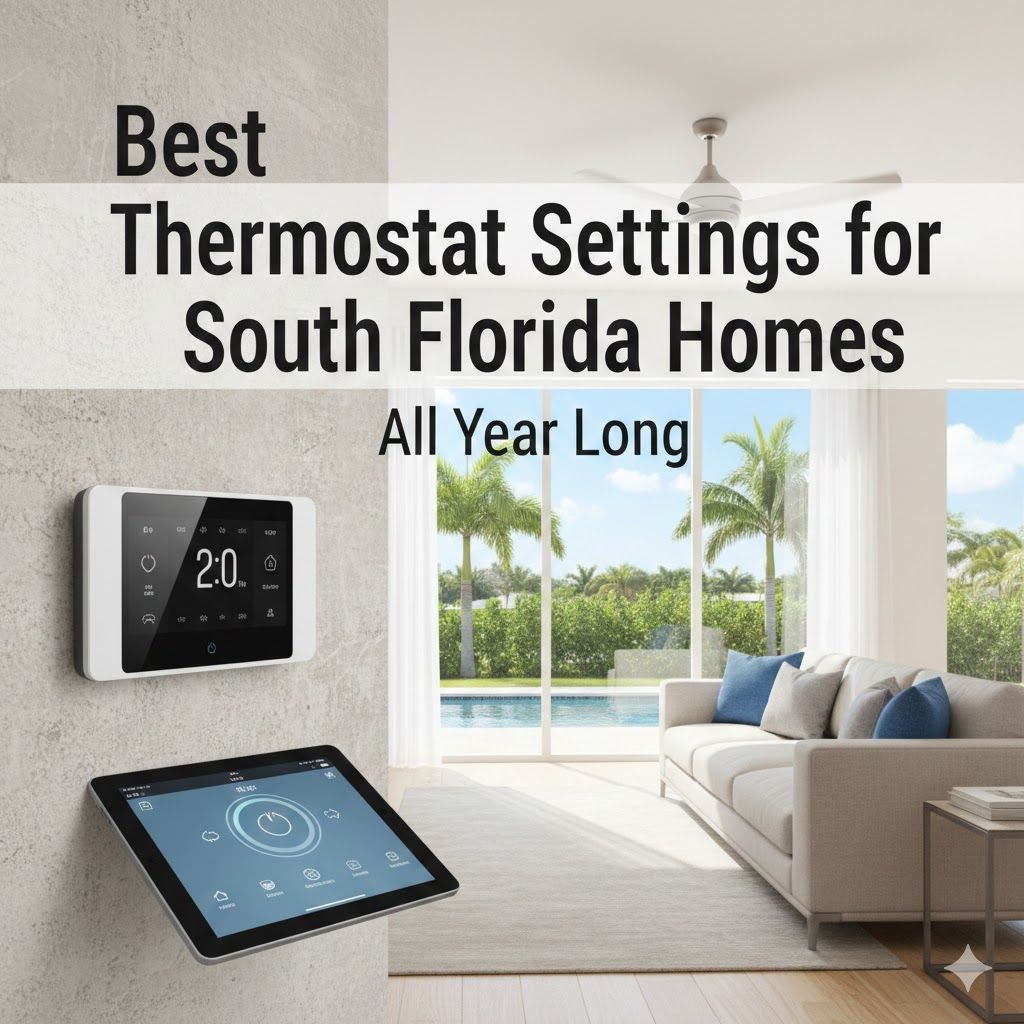
For South Florida homes, the thermostat is a strategic upgrade, not just a convenience. Programmable and smart models both offer ways to automate setpoints, but they do so in different ways.
Programmable thermostats allow homeowners to schedule temperatures for different times of day and days of the week. This works well for households with fairly regular routines—workday vs. weekend, daytime vs. nighttime. Once programmed, these thermostats can steadily apply energy‑saving strategies without constant human attention.
Smart thermostats add connectivity and learning features. They can be controlled from a smartphone, integrate with voice assistants, and in some cases, gradually learn patterns of use and adjust schedules automatically. For South Florida homeowners who travel frequently, own second homes, or want to monitor a house remotely, being able to check and change settings from anywhere is a major advantage.
Regardless of which type is chosen, the real benefit comes from using scheduling and features correctly. Setting a thoughtful schedule that reflects when people are actually home, asleep, or away will almost always yield more savings and comfort than leaving the thermostat on a single fixed temperature around the clock.
7. Special situations: snowbirds, home offices, pets, elderly
Many South Florida homes have unique occupancy patterns that influence ideal thermostat settings.
Snowbirds who leave their homes empty for months at a time need a strategy that protects the property from humidity damage without cooling it like an occupied house. A moderately high cooling setpoint paired with limited scheduling and remote monitoring works well for these seasonal residents. The focus is on preventing excessive dampness, not achieving everyday comfort.
Homes with dedicated offices require a bit more nuance. People sitting at desks often feel cooler than those moving around the house. In that case, a slightly warmer whole‑house setting can still feel comfortable if ceiling fans are used in the office and the chair is positioned away from supply vents that blow directly on the occupant.
Pets, elderly residents, or people with medical concerns may require more conservative ranges. Pets generally tolerate a somewhat wider temperature range than humans, but extreme heat or sudden swings should be avoided. Older adults or those with heart and respiratory issues often feel temperature changes more acutely and may benefit from a narrower comfort band with smaller day‑night swings.
In all these cases, modern thermostats with multiple schedules, zones (where available), or remote room sensors can help fine‑tune comfort for specific spaces and occupants.
8. Simple thermostat habits that cut bills
Without changing equipment, most households in South Florida can trim cooling costs with a few consistent thermostat habits.
Avoid drastic changes. Instead of regularly jumping several degrees up and down, make smaller adjustments and allow time for the house to respond.
Use ceiling fans wisely. Fans cool people, not rooms. They allow a slightly higher setpoint while maintaining comfort, but they should be turned off in empty rooms to avoid wasting electricity.
Set realistic expectations. In the hottest parts of the year, trying to maintain a very low indoor temperature around the clock can strain the system and may not be achievable during peak sun. A realistic target in the mid‑70s with good humidity control is generally more sustainable.
Teaching everyone in the household to respect the schedule and resist “thermostat wars” goes a long way toward stable comfort and predictable energy use.
9. When settings aren’t enough
Sometimes, even smart thermostat use is not enough to keep a South Florida home comfortable. If the thermostat has been set sensibly and the home still feels sticky, unevenly cooled, or never seems to reach the desired temperature, the problem may lie elsewhere.
Common issues include:
Oversized or undersized equipment that short‑cycles or runs constantly.
Leaky or poorly insulated ductwork that loses cooled air in the attic or pulls hot, humid air into the system.
Blocked returns or closed vents that restrict airflow and reduce the system’s ability to dehumidify.
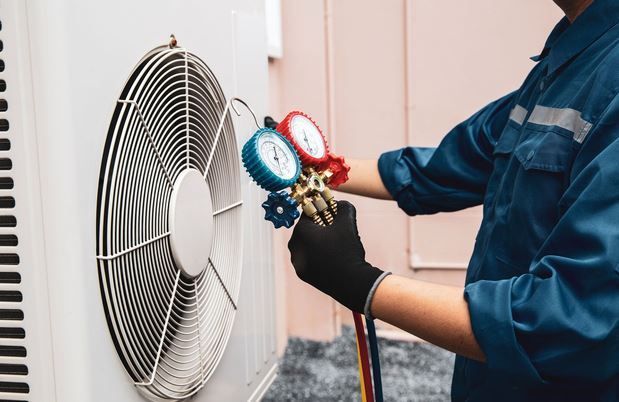
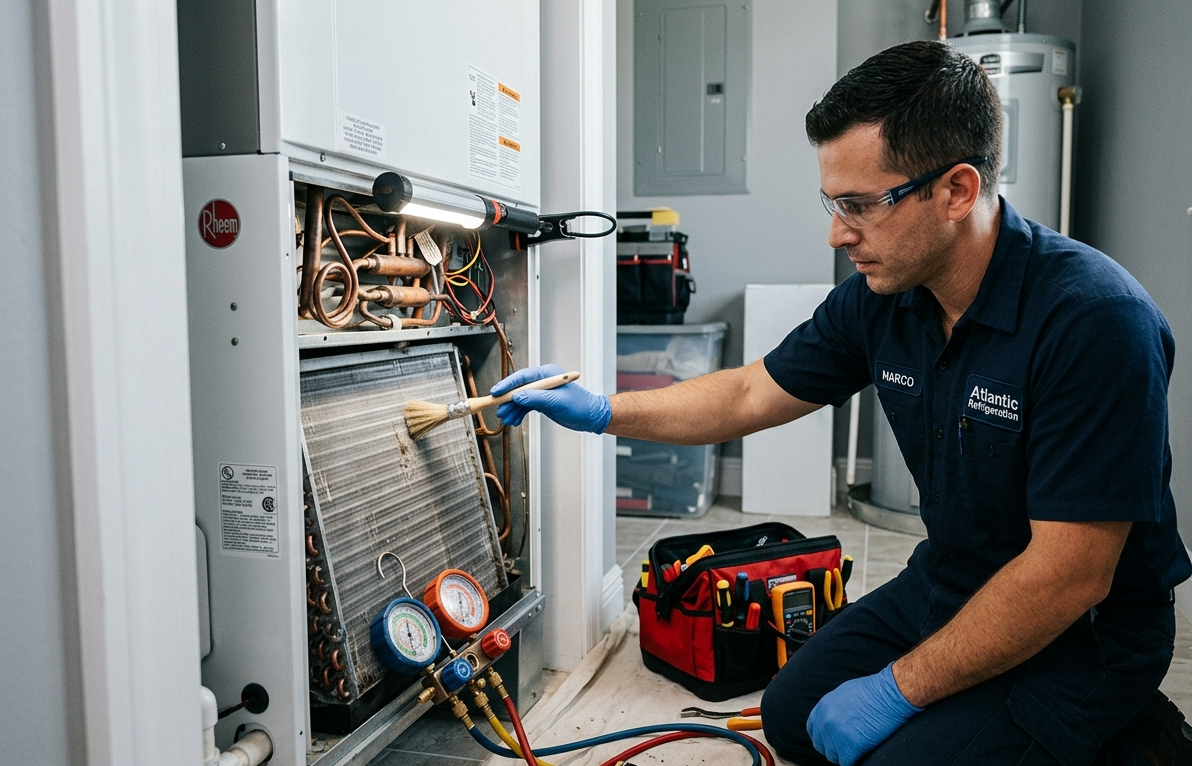
Dirty coils, clogged filters, or low refrigerant levels that reduce cooling capacity.
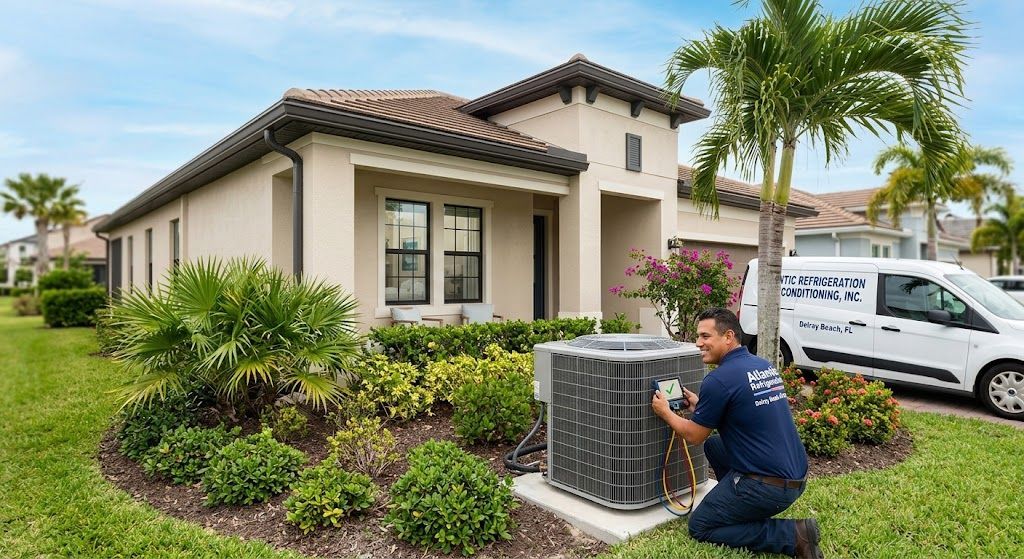
In these situations, a professional evaluation of the system, ductwork, and building envelope is often the fastest path to both better comfort and lower bills. Thermostat settings can then be fine‑tuned as the “finishing touch” once the system is operating as designed.