How Small Duct Leakage Add Up to Big Power Bills

Corey Creekmore • January 7, 2026

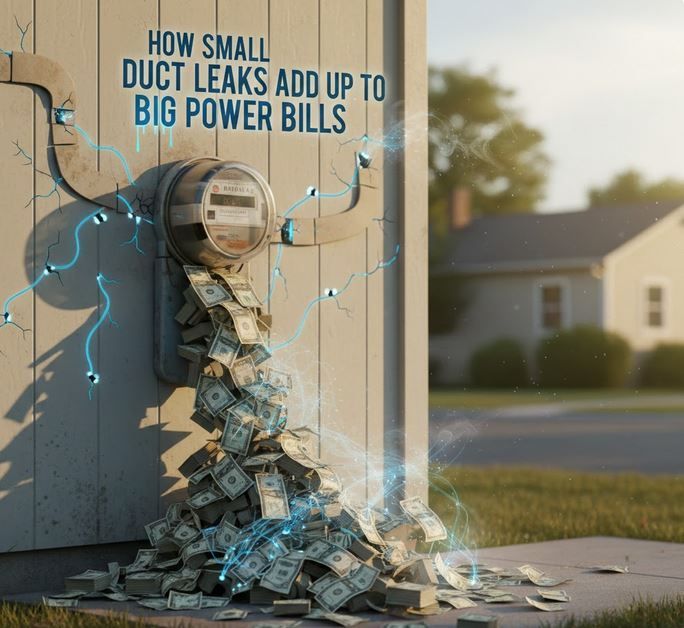
Even small duct leaks can quietly waste a large portion of the heating and cooling you pay for, driving up power bills month after month. In many homes, leaky ducts can reduce system efficiency by up to about 20–30%, which is like throwing away a quarter of your HVAC budget.

​


What Duct Leaks Actually Are

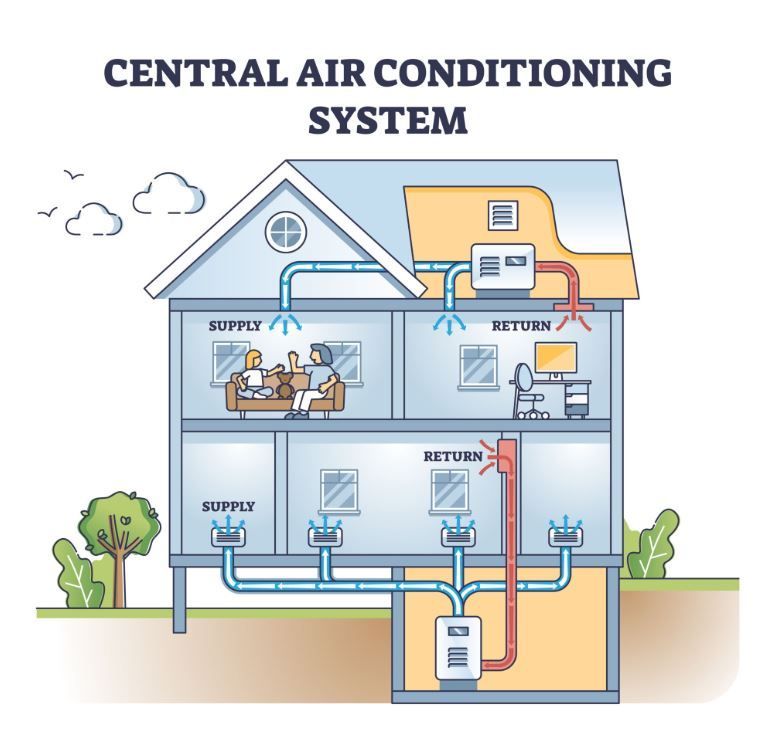
Duct leaks are gaps, cracks, and loose joints in the metal or flexible tubes that move conditioned air around your home. Instead of delivering air to rooms, these leaks dump cooled or heated air into attics, crawl spaces, garages, or wall cavities where it does no good.

​


Common leak points: around joints, take‑offs, boots, and where ducts connect to the air handler or plenums.

​


Hidden locations: long duct runs in hot attics, undersized returns, and flex duct that has been pulled too tight or kinked.

​


Even if the openings look small, the total area of all those gaps can add up to the equivalent of a window left open all year.

​


How Leaks Waste Energy (and Money)

When conditioned air escapes before it reaches your rooms, your system has to run longer to reach the thermostat setting.

​


The U.S. Department of Energy estimates many homes lose 20–30% of conditioned air through leaky ducts.

​


ENERGY STAR notes that sealing and insulating ducts can improve HVAC efficiency by up to about 20%, directly cutting energy waste.

​


This extra runtime shows up as:


Higher electricity or gas use every hour the system runs.

​


Longer cycles in extreme weather, when the system is already working hardest.

​


Over a full cooling or heating season, those “small” leaks can add hundreds of dollars to power bills.

​


Comfort Problems You Can Feel

Leaky ducts do more than waste money; they also make homes less comfortable.

​


Rooms far from the air handler may be consistently hotter or colder because they never get their share of conditioned air.

​


You might notice weak airflow from some vents, especially at the ends of long runs.

​


Thermostat “yo‑yoing”: people keep lowering or raising the setting to compensate, which drives energy use even higher.

​


Because leaks often dump air into attics or crawl spaces, they can also pull dusty, unfiltered air into the system, degrading indoor air quality.

​


Why Small Leaks Add Up Over Time

The math behind duct leaks is simple but powerful.

​


A typical ducted system may move hundreds of cubic feet of air per minute.


Losing even 10–20% of that flow at multiple leak points means a huge volume of wasted conditioned air every hour.

​


Because leaks often occur in very hot or very cold spaces (attics, crawl spaces), temperature differences are large, so energy loss is greater.

​


If your HVAC runs thousands of hours per year, a “small” efficiency loss compounds into major energy waste and unnecessary wear on equipment.

​


Common Signs Your Ducts Are Leaking

Several everyday clues point toward leaky ductwork.

​


Unexplained spikes in power bills, even when usage habits have not changed.


Hot and cold spots from room to room, especially at the far ends of duct runs.


Excess dust, especially near supply registers and around the home.

​


Noticeably noisy return ducts or whistling sounds at joints when the system runs.

​


Homeowners often assume these issues are normal, but they frequently trace back to duct leakage and poor duct design.

​


DIY Checks vs. Professional Testing

There are simple checks you can do yourself and deeper tests best left to pros.

​


DIY steps:


Inspect accessible ducts in attics or garages for disconnected joints, visible gaps, or old, peeling tape.


Feel around joints while the system is running to locate obvious air movement.


Look for dirty insulation or dark streaks around seams, a sign that air is escaping there.

​


Professional steps:


Duct leakage testing using a fan and pressure gauge to quantify total leakage.

​


Airflow measurements to confirm each room receives the right amount of air.


Full inspection of both supply and return ducts, including hidden sections.

​


A test‑and‑seal approach confirms not only that leaks exist, but how much they are costing in lost efficiency.

​


Best Ways to Fix Leaky Ducts

Effective duct sealing goes beyond the quick band‑aid of regular “duct tape.”

​


Use mastic sealant or UL‑listed metal foil tape on joints, seams, and connections, especially near the air handler and at boot connections.

​


Secure and seal flex duct connections with mechanical fasteners plus mastic, not just tape.

​


Insulate ducts in unconditioned spaces so conditioned air stays closer to the desired temperature during its journey.

​


Some homes benefit from advanced sealing methods (like aerosolized sealants) that can reach leaks deep inside duct systems that are otherwise inaccessible.

​


How Sealing Ducts Pays You Back

Sealing small leaks can deliver outsized savings over the life of the system.

​


ENERGY STAR and the U.S. Department of Energy indicate that proper duct sealing and insulation can improve HVAC efficiency by roughly 20% and cut duct losses that often total 20–30% of conditioned air.

​


Lower runtime means fewer breakdowns, less stress on components, and potentially a longer equipment life.

​


In many homes, duct sealing is a one‑time upgrade that continues saving money every month, often paying for itself through reduced energy bills.

​


When to Call a Professional

While minor visible gaps are sometimes safe for a handy homeowner to address, there are times when a professional HVAC contractor is the smarter choice.

​


Persistent comfort issues or large, unexplained energy bill increases.


Older homes where ductwork has been modified repeatedly.


Systems with very limited access to ducts, especially in tight attics or crawl spaces.

​


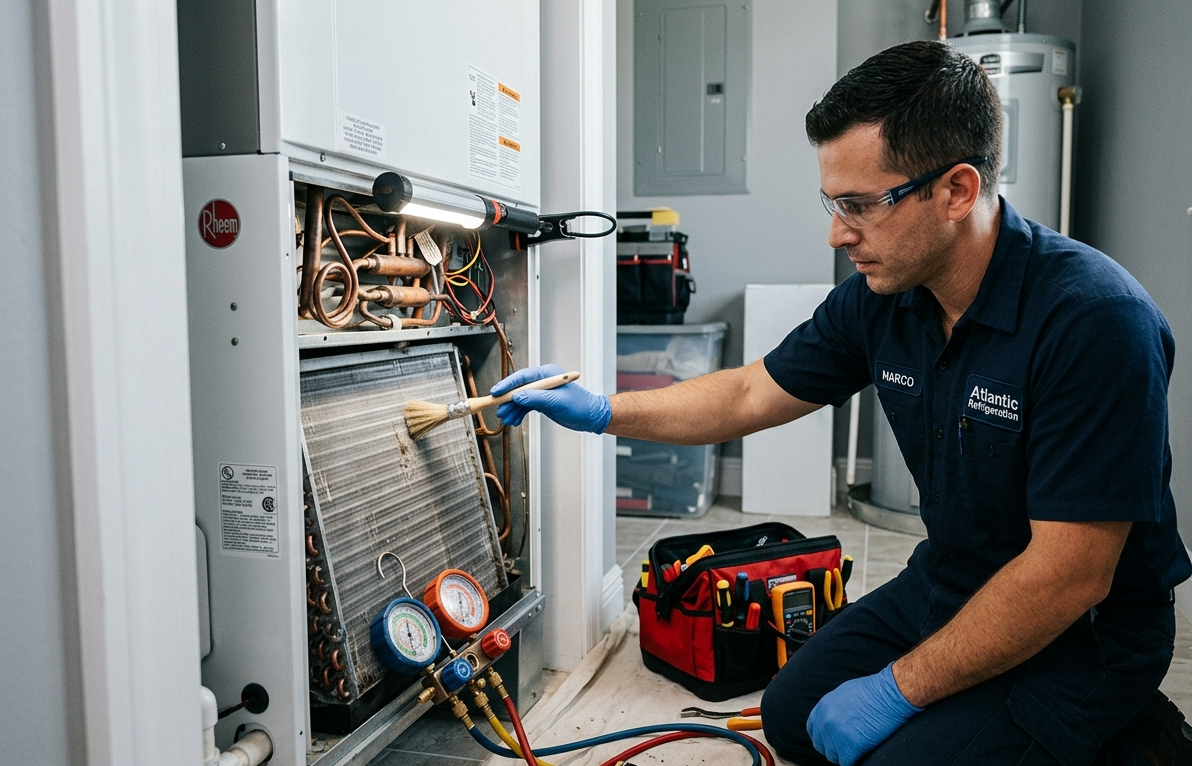
A qualified technician can diagnose leaks, correct design issues, seal and insulate ducts properly, and verify performance improvements with testing.
​


Recent Posts

mini split
By Corey Creekmore February 12, 2026
Discover 10 compelling reasons why a mini-split AC system is the superior choice for your home. Enjoy efficient, customizable comfort and save on energy bills!
refrigeration
By Corey Creekmore February 5, 2026
Protect your inventory and avoid breakdowns with our commercial refrigeration preventive maintenance checklist covering daily, weekly, monthly, and annual tasks.
heater strange noises
By Corey Creekmore January 28, 2026
Heater making strange noises? Learn what banging, rattling, squealing, or grinding sounds mean, safe DIY checks, and when to call a pro to fix your system.
repair heater
By Corey Creekmore January 21, 2026
Learn how to repair your own heater with safe, DIY troubleshooting tips that fix common furnace problems, boost efficiency, and keep your home warm all winter.
By Atlantic Refrigeration January 17, 2026
Expert ice machine repair solutions in Fort Lauderdale, FL. Atlantic Refrigeration fixes commercial ice makers for restaurants, bars, and hospitality businesses quickly.
By Corey Creekmore January 15, 2026
When the heat goes out, comfort drops fast—but not every problem needs a repair call. Try these simple checks first to see if you can get your system running again safely. 1. Confirm thermostat settings Make sure the thermostat is set to Heat, not Cool or Off. Raise the set temperature 3–5 degrees above room temperature. Replace thermostat batteries if the screen is dim, blank, or unresponsive. 2. Check the power and breaker Look at your electrical panel for a tripped breaker and reset it once if needed. Verify the furnace or air handler switch (often looks like a light switch nearby) is in the On position. If power trips again, stop and call a professional—there may be an electrical fault. 3. Verify the furnace door and safety switches Many furnaces will not run if the front access panel is not fully closed. Open the panel, check for anything obvious out of place, then close it firmly until it clicks. Wait a few minutes and see if the system starts up. 4. Replace or clean the air filter A clogged filter can make the system overheat and shut down for safety. Locate the filter, slide it out, and check: if it’s gray, dusty, or hard to see light through, replace it. Use the same size and orientation (airflow arrow pointing toward the furnace). 5. Check supply and return vents Walk through the home and confirm vents are open and not blocked by furniture, curtains, or rugs. Keep return grilles clear so air can flow back to the system. Avoid closing too many vents in unused rooms, which can stress the system. 6. Look at the pilot light or ignition (For older gas furnaces with a standing pilot) If the pilot light is out, follow the manufacturer’s lighting instructions on the unit label. If the flame will not stay lit or you smell gas, stop immediately and call a pro or your gas company. (For modern furnaces with electronic ignition) These use spark or hot-surface igniters; if you hear repeated clicking with no start, it likely needs professional service. 7. Make sure the gas or fuel is on Confirm the gas shutoff valve near the furnace is parallel to the pipe (On position). If you use propane or oil, check the tank gauge to ensure you’re not out of fuel. If you ever smell strong gas, leave the building and contact emergency services—do not keep troubleshooting. 8. Inspect the outdoor unit (for heat pumps) If you have a heat pump, check the outdoor unit for snow, leaves, or debris blocking airflow. Gently clear away obstructions and make sure the unit is not buried or iced over. If there is heavy ice buildup, turn the system off and call a professional. 9. Check for error codes or indicator lights Many furnaces have a small viewing window with an LED that blinks in a pattern. Note the blink pattern and keep it handy for the technician—it helps pinpoint the problem. Some smart thermostats also show specific error messages or lockouts. 10. Give the system a “soft reset” Turn the thermostat to Off and the system switch at the furnace to Off. Wait 5–10 minutes, then turn the furnace switch On and reset the thermostat to Heat. Listen for the sequence: blower, ignition, and warm air from vents. If it still fails, it’s time to call for service. When to stop and call a professional You smell gas, burning, or strong electrical odors. The breaker keeps tripping or the furnace shuts down repeatedly. You see visible damage, scorch marks, or loose wiring. A quick visual and basic check often brings a non-working heater back online, but if these steps don’t help—or anything seems unsafe—shutting it down and calling a licensed technician is the safest move.
power bill
By Corey Creekmore January 1, 2026
Coastal “salt tax” is real. Learn how salty, humid air wears down your HVAC, drives up energy use, and what you can do to protect your comfort and power bill.
By Corey Creekmore December 24, 2025
Debunk common AC filter replacement myths, protect your system, and improve indoor air quality while cutting energy bills in humid homes with simple steps.
By Atlantic Refrigeration December 18, 2025
Professional walk-in cooler installation services in Boca Raton, FL. Atlantic Refrigeration ensures proper setup for restaurants and commercial food storage needs.
AC Unit
By Corey Creekmore December 16, 2025
Discover 7 hidden AC issues a quick tune-up will never catch, why they quietly drive up bills, and how to truly fix AC issues before they get costly.
Show More