For decades, commercial refrigeration has operated on a simple, stressful principle:
Wait until it fails, then panic.
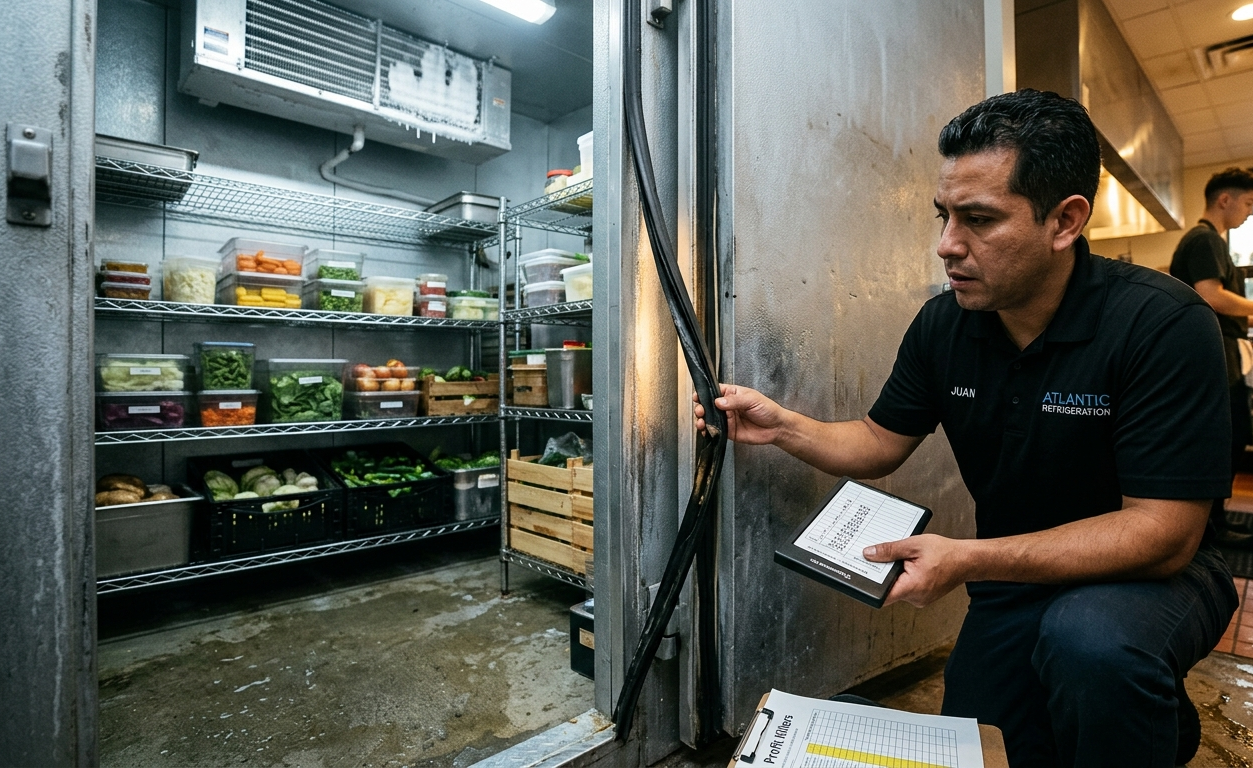
If you run a restaurant, a hospital, or a cold storage facility, you are familiar with the 3:00 AM emergency call. The walk-in freezer is at 45°F and climbing. Thousands of dollars in inventory is rapidly approaching the safety danger zone. Your next few hours will involve expensive emergency service rates, finding dry ice, and praying the compressor isn't dead.
This is
reactive maintenance, and it is the standard model. It is inefficient, stressful, and, above all, incredibly expensive.
But a revolution is quietly happening inside your cooling units. The age of
reactive panic is giving way to the era of
predictive peace of mind. We are moving from "Wait for the break" to "Predict the failure."
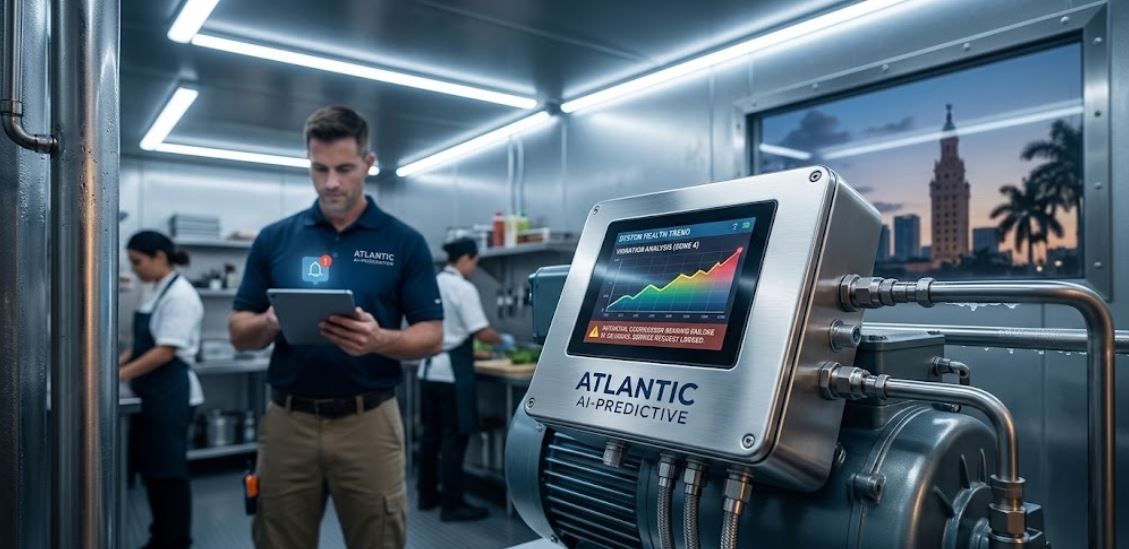
Soon, your commercial refrigerator won't just keep your food cold; it will monitor its own health, diagnose its internal struggles, and automatically call Atlantic Refrigeration to schedule a fix—days or weeks before it actually breaks down.
Welcome to the future of
AI-powered commercial refrigeration maintenance. Here is how it works, why it is essential, and why Atlantic Refrigeration is ready for the call.
The Evolution of Maintenance: From Wrenches to Algorithms
To understand where we are going, we must look at where we are.
Historically, maintenance fell into two categories:
- Reactive (Break-Fix): You fix it when it stops working. This maximizes equipment downtime and minimizes inventory lifespan.
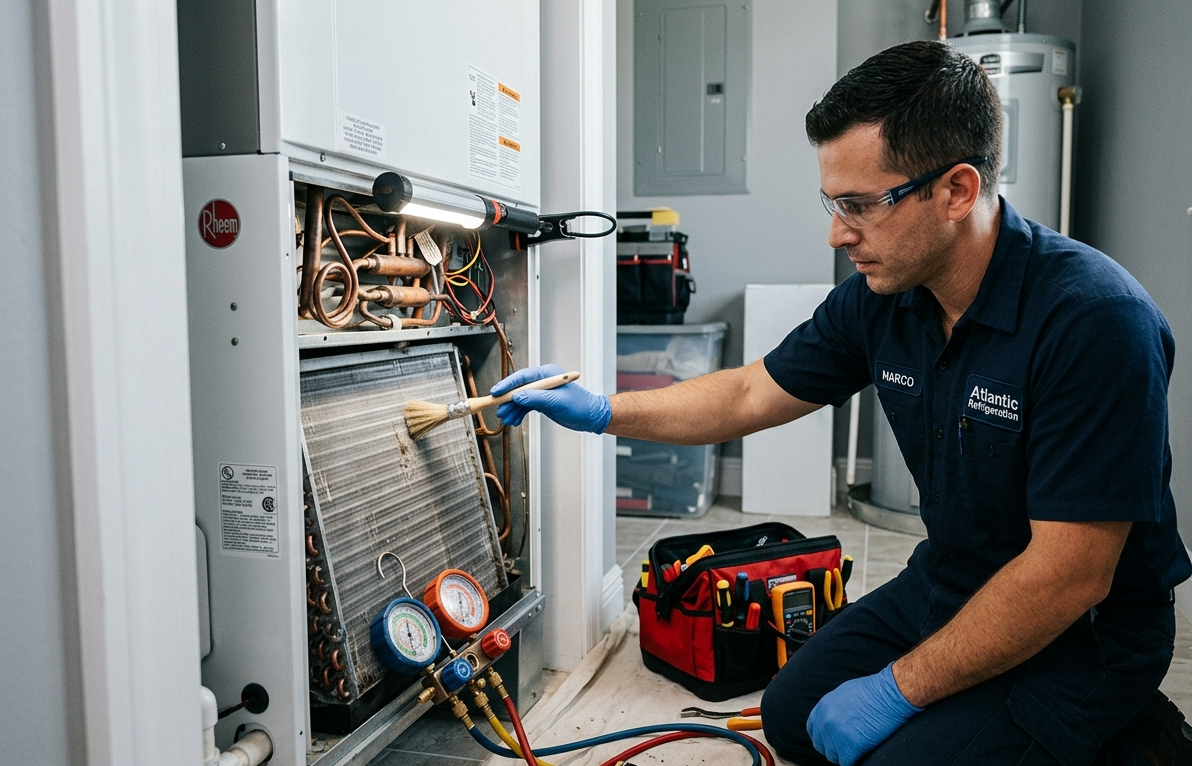
- Preventive (Schedule-Based): A technician visits every six months to clean coils, check levels, and replace filters. This is better, but it's often arbitrary. You might be paying to service a perfectly healthy system, or conversely, a critical component might fail two days after the tech leaves because a specific anomaly wasn't visible during the scheduled visit.
Predictive Maintenance, powered by Artificial Intelligence (AI) and the Internet of Things (IoT), is the third way. It uses real-time data to determine the actual condition of the equipment, allowing maintenance to be performed only when necessary, but exactly when needed.
How the "AI Fridge" Knows a Failure is Coming
How does a machine predict its own demise? It's not magic; it’s massive data analysis and pattern recognition. An AI-integrated refrigeration system uses a network of advanced, low-cost sensors constantly feeding data to a central processor (either on-site or in the cloud). This AI brain monitors critical variables, looking for signatures of failure that are invisible to the human eye.
Here are the specific parameters the AI monitors:
1. Vibration Analysis (The Early Warning System)
Every rotating component—the compressor, the condenser fan, the evaporator motors—has a unique "vibration fingerprint." When a bearing begins to wear out, or a fan blade becomes unbalanced, that fingerprint shifts. The AI doesn't just detect that it's vibrating differently; it can identify which component is deteriorating and predict how much usable life it has left based on millions of failure models.
2. Thermal Imaging and Temperature Fluctuations
A system about to fail often gets hot before it gets warm. Sensors monitor the temperature of critical electrical connections, motors, and compressor housings. An unexplained spike in internal temperature is an immediate red flag. The AI can differentiate between a temperature rise caused by a door being left open (a normal event) and a rise caused by an inefficient cooling cycle (an anomaly).
3. Energy Consumption Patterns
A struggling system fights to stay cool. The AI monitors the power draw (amperage) of the motors. If a compressor is suddenly pulling 20% more energy than usual to maintain the same set point, it’s a sign of internal drag, valve failure, or a refrigerant leak. This spike is often visible weeks before a total shutdown.
4. Acoustics and Sound Signature
Like vibration, every machine has a voice. Advanced acoustic sensors (microphones) listen for specific frequencies or patterns associated with failing bearings, loose belts, or refrigerant turbulence. The AI learns the "sound of health" and flags anything that deviates.
5. Pressure and Fluid Dynamics
IoT pressure transducers constantly measure suction and discharge pressures. The AI compares these readings to outdoor ambient temperature and indoor load conditions. If the pressure curves diverge from optimal efficiency models, the AI knows a leak, a blockage, or a failing expansion valve is to blame.
The Call: How AI Automates the Solution
The power of AI refrigeration isn't just in the diagnosis; it’s in the automation of the response.
When the system detects an anomaly—for example, a signature 74Hz vibration frequency indicating imminent bearing failure in the condenser fan—it triggers an automated protocol. The fridge doesn't just buzz; it acts.
- Data Logging: The precise data anomaly is logged and packaged into a diagnostic report.
- Probability Modeling: The AI determines the urgency. "Failure expected within 72 hours" vs. "Efficiency loss of 15%, service recommended within 30 days."
- The Automated Call: The system uses its IoT connection to send an immediate service request directly to the dispatch software at Atlantic Refrigeration.
- Technician Preparation: When the Atlantic technician receives the dispatch, they don't just see "A/C unit down." They see a report: "Unit 4 (Main Walk-In) triggered Warning: Condenser Fan Bearing Failure. Predicted life: 48 hours. Part number: CFM-4503."
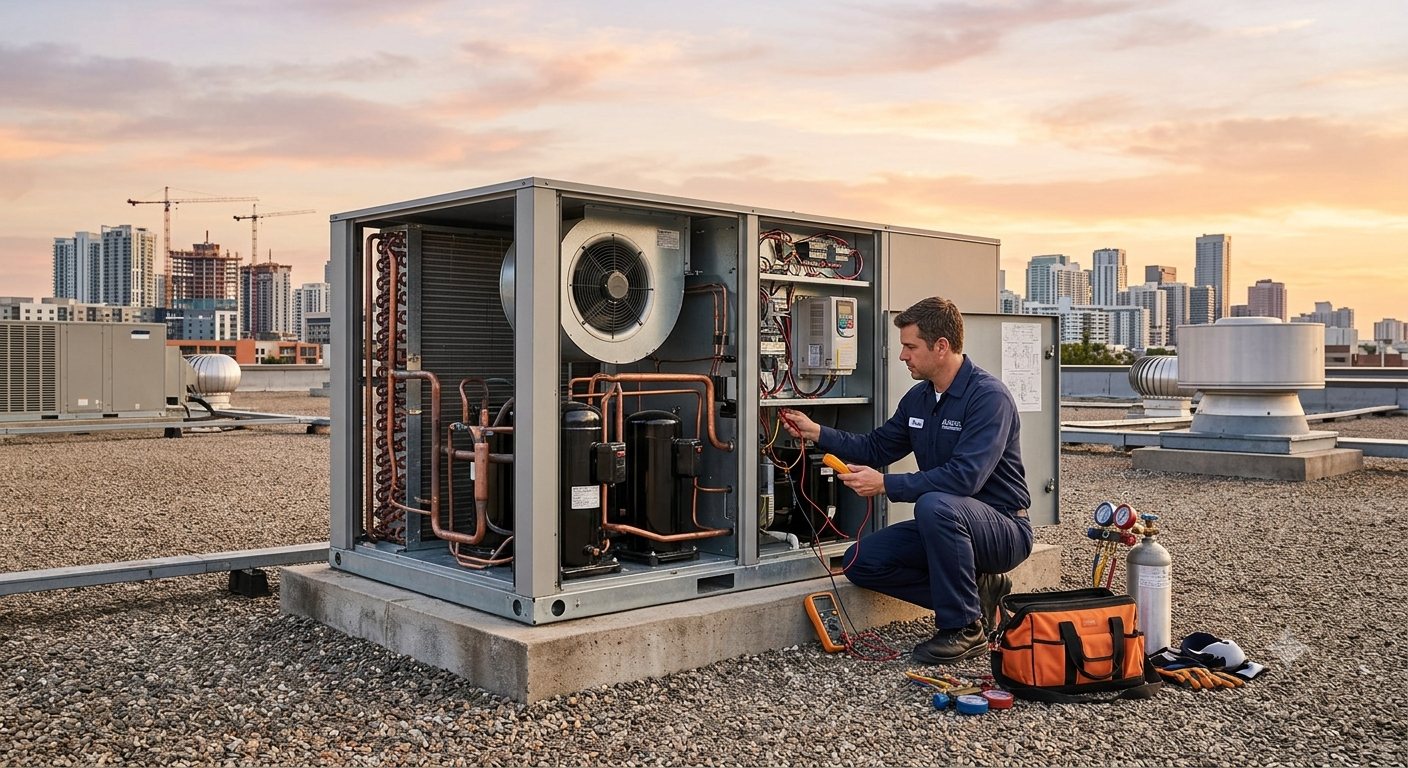
The technician arrives knowing exactly what is wrong and already carrying the necessary replacement part.
Why Business Owners Must Embrace the AI Shift
This technology isn't just "cool tech"; it's a financial imperative for any business reliant on cold storage. The advantages of AI-driven predictive maintenance over the old ways are overwhelming.
1. Eliminate Catastrophic Downtime
The most significant benefit is the shift from weeks of downtime to scheduled downtime. Fixing a bearing before the compressor overheats turns a catastrophic shutdown into a 45-minute scheduled part swap during off-hours. Your business never stops.
2. Protect Inventory and Assets
Inventory loss (spoilage) is a massive, sudden blow to profitability. Predicting failure means you never risk your product. Furthermore, fixing a single failing fan motor (cost: $200) prevents it from causing the compressor (cost: $6,000) to overheat and fail prematurely.
3. Radical Energy Efficiency
A system operating perfectly is an efficient system. By constantly monitoring and correcting minor issues—like optimizing refrigerant levels, cleaning sensors, or replacing slightly worn belts—the AI ensures your system uses the absolute minimum amount of energy. Studies show predictive maintenance can reduce energy costs by
10-20% compared to reactive systems.
4. Extended Equipment Lifespan
When you operate equipment optimally and fix issues precisely when they arise, you reduce the overall stress on the entire system. Instead of replacing a walk-in every 12 years, a predictive system, regularly maintained, can easily push that to 18 or 20 years, dramatically improving ROI.
Atlantic Refrigeration: Your Partner in the Predictive Future
The transition to AI-integrated refrigeration can feel complex, but it doesn't have to be. For existing businesses, you do not need to buy brand-new cooling units. The revolution is happening via retrofit IoT sensor kits that "smart-ify" your reliable, older assets.
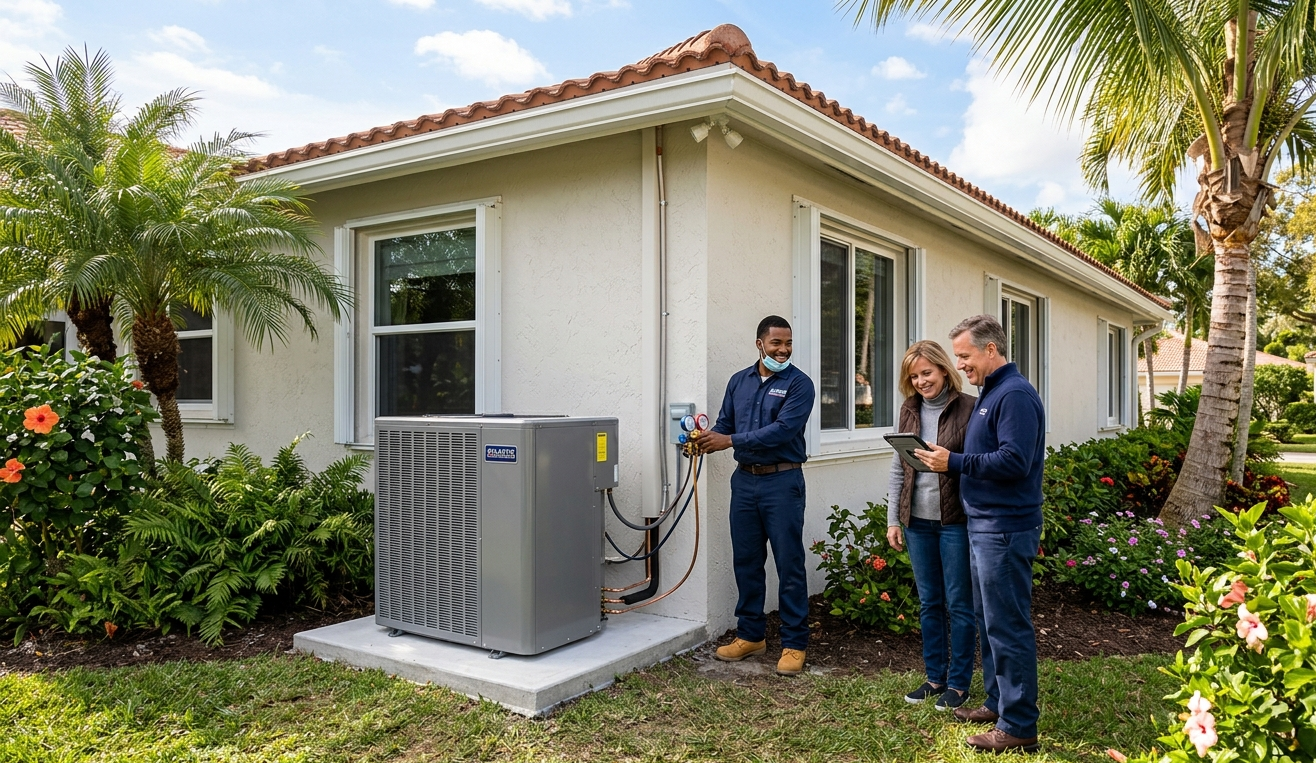
Atlantic Refrigeration is at the forefront of this industrial shift. We are investing in the training, diagnostic tools, and software integrations necessary to handle automated service calls. When your system calls us, we are ready to answer with data-driven expertise and the exact parts you need.
Don't wait for the 3:00 AM panic call. Contact
Atlantic Refrigeration today to discuss how we can implement monitoring solutions that let your system call us before it breaks. Turn your refrigerator into an asset that manages itself, so you can focus on managing your business.
The future of
refrigeration maintenance is silent, efficient, and predictive. Are you ready?