Maintaining a comfortable and efficient environment within a commercial building is paramount for employee productivity, customer satisfaction, and equipment longevity. A critical component of this is having a well-designed and customized cooling solution in place. Unlike residential spaces, commercial properties have significantly diverse needs, rendering a generic approach ineffective. This article will guide you through the process of customizing cooling solutions for your commercial HVAC system, ensuring optimal performance, energy efficiency, and a pleasant indoor climate.
Understanding the Importance of Customization
Commercial buildings vary immensely in size, layout, occupancy levels, and the activities they house. What works for a small retail store won’t be sufficient for a sprawling data center or a busy restaurant kitchen. Failing to customize your cooling system can lead to several problems:
1. Uneven Temperatures: Poorly designed systems can leave some areas of your building scorching hot while others are freezing cold. This creates discomfort for occupants and can impact business operations.
2. Inefficient Energy Usage: Over-sized or under-sized systems waste energy, leading to excessively high utility bills. A customized solution is tailored to your building’s exact requirements, maximizing energy efficiency.
3. Frequent Breakdowns: Systems under constant strain because they are not properly matched to the load are more prone to breakdowns and require more frequent repairs, adding significantly to maintenance costs.
4. Poor Air Quality: Proper cooling is intertwined with adequate ventilation and filtration. A generic system might struggle to maintain acceptable indoor air quality, potentially leading to health issues and discomfort.
The Customization Process: A Step-by-Step Guide
Customizing a commercial cooling solution involves a detailed evaluation of your building’s unique characteristics and requirements. Let's break down the key steps:
Step 1: Conduct a Comprehensive Building Assessment
The foundation of any customized cooling solution is a thorough assessment of your building. This involves a professional HVAC technician or engineer evaluating various factors:
Building Size and Layout: A detailed analysis of the square footage and the configuration of the building (number of floors, ceiling height, and the layout of individual spaces) is crucial. This helps determine the overall cooling capacity required and the best distribution method.
Heat Gain Analysis: This is a vital step where the engineer calculates how much heat enters the building from various sources. This includes:
- External Sources: Heat gain through windows (solar radiation), walls, and the roof. This is significantly influenced by the building’s orientation, insulation quality, and the types of windows used.
- Internal Sources: Heat generated within the building by people, lighting, computers, office equipment, and other machinery. High-density environments like offices with many employees and computers will have higher internal heat gains.
- Infiltration: Heat that enters through cracks around windows, doors, and other openings.
Occupancy Patterns: Understanding when and how the building is used is essential. Buildings that are occupied 24/7 (like hospitals or data centers) require different solutions than those with standard business hours. The number of people present and their activity levels also influence cooling needs.
Process-Specific Heat Loads: Some businesses have specific processes that generate significant heat. For instance:
- Commercial Kitchens: Cooking equipment releases a lot of heat and moisture, requiring powerful localized cooling and ventilation.
- Data Centers: Servers and computer equipment generate enormous amounts of heat, necessitating precise temperature and humidity control 24/7.
- Manufacturing Facilities: Machines used in manufacturing processes can generate substantial heat.
Step 2: Determine Cooling Requirements (Load Calculation)
Based on the detailed building assessment, the HVAC professional performs a comprehensive heating and cooling load calculation. This calculation determines the total amount of heat that needs to be removed from the building (the cooling load) to maintain the desired temperature and humidity levels.
This is not a simple calculation based solely on square footage. It takes into account all the factors gathered in the assessment:
- Specific heat gain from each source (walls, windows, people, equipment, etc.)
- The desired indoor temperature and humidity set points
- The climate and typical weather patterns in your location
Accuracy in load calculation is paramount. An undersized system will struggle to keep the building comfortable, while an oversized system will cycle on and off frequently (short cycling), reducing efficiency and shortening the lifespan of the equipment. Modern HVAC load calculation software is used to ensure precise results.
Step 3: Choose the Right Cooling System Type
Once the required cooling capacity is determined, the next step is selecting the most suitable type of commercial HVAC system. The optimal choice depends on the size of the building, its specific requirements, and budget constraints. Let's explore some common options:
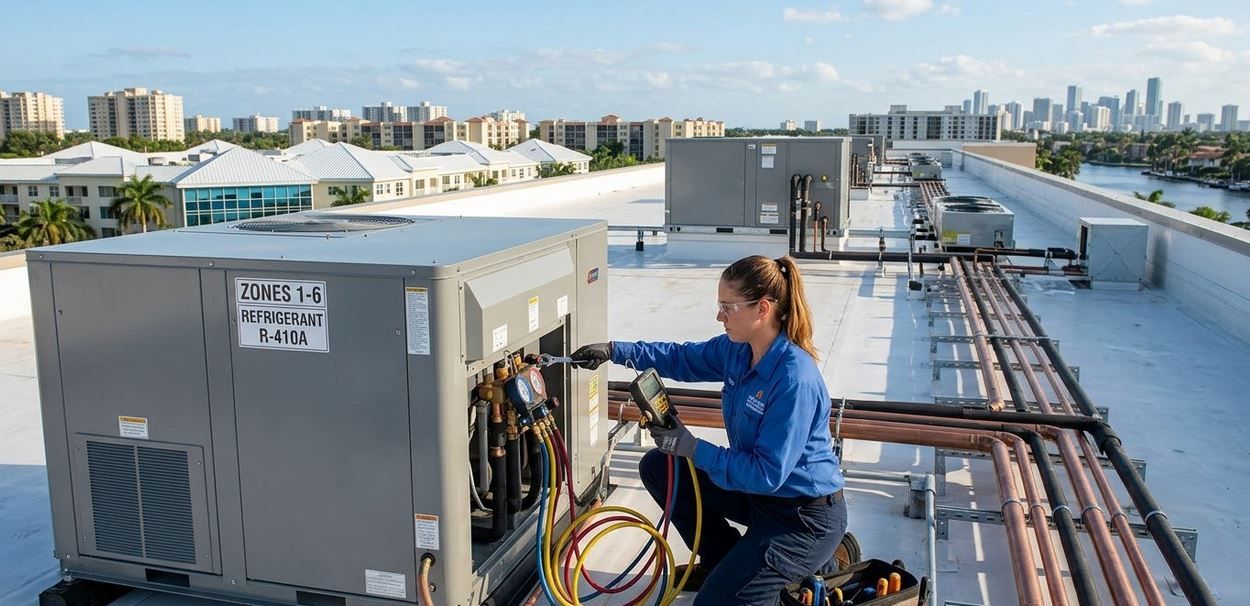
A. Rooftop Units (RTUs): These self-contained units house all components (compressor, condenser, and evaporator) and are usually installed on the building’s roof. They are popular for low-rise commercial buildings, retail spaces, and restaurants due to their relative simplicity, ease of installation, and compact footprint. RTUs are well-suited for single-zone applications.
B. Split Systems: These systems have the condenser unit located outdoors and the evaporator coil and fan located indoors, typically within an air handling unit (AHU) or furnace. Split systems can be ducted and offer more flexibility for zoning, making them suitable for multi-story buildings and office spaces where different areas have varying cooling needs. They are quieter indoors since the noisy compressor is located outside.
C. Variable Refrigerant Flow (VRF) Systems: VRF systems represent a sophisticated and highly efficient option, particularly for multi-story or large commercial buildings. These systems use varying amounts of refrigerant flowing to multiple indoor units (fan coils) connected to a single outdoor unit. This allows for precise, individualized temperature control in different zones, with the ability to provide simultaneously heating in some areas and cooling in others. VRF systems are known for their exceptional energy efficiency, quiet operation, and flexible installation.
D. Chiller Systems: For very large commercial facilities like high-rise office buildings, hospitals, campuses, and industrial plants, chiller systems are often the most effective and efficient solution. Chillers produce chilled water, which is then circulated through pipes to air handling units or fan coil units located throughout the building to cool the air. There are two main types:
- Air-Cooled Chillers: Use fans to reject heat into the air. They are generally simpler and have lower maintenance requirements but might be less efficient than water-cooled chillers.
- Water-Cooled Chillers: Use water to remove heat, which is then often released via a cooling tower. These are typically more efficient than air-cooled chillers but require more complex infrastructure (pumps, piping, cooling towers) and significant maintenance.
E. Specialized Systems: Certain environments require unique solutions. Data centers, for example, rely on Computer Room Air Conditioning (CRAC) or Computer Room Air Handler (CRAH) units designed specifically for precise temperature and humidity control with robust air filtration and continuous operation capabilities.
Step 4: Design the Air Distribution System (Ductwork and Diffusers)
The best cooling equipment is ineffective if the cooled air isn't distributed properly throughout the building. Designing the air distribution system is a critical component of customization.
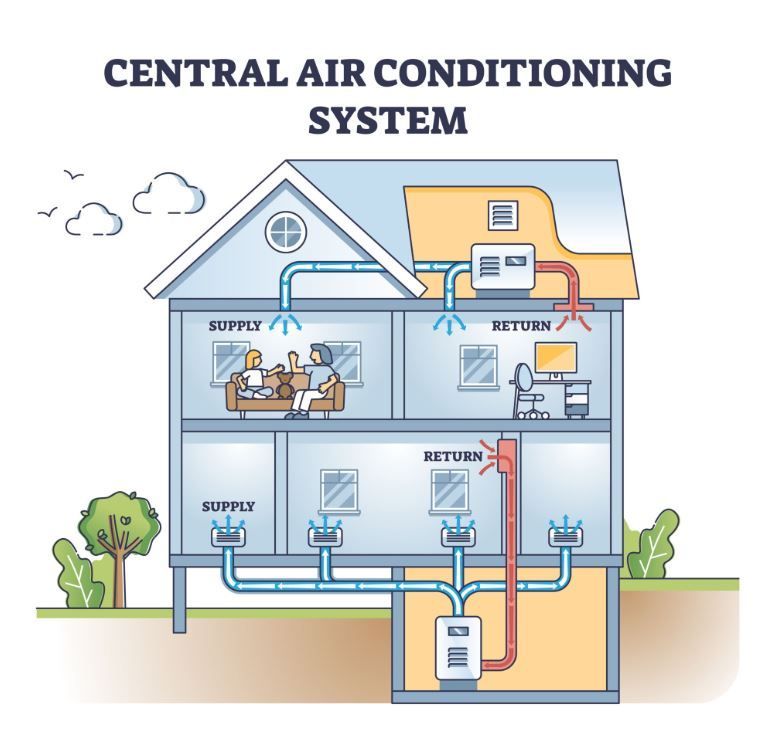
1. Ductwork Design: The ductwork system, whether constructed of sheet metal, duct board, or flexible materials, must be sized and laid out to deliver the required airflow to each zone while minimizing air friction and leaks. Proper insulation is crucial to prevent energy loss and sweating. The layout should ensure adequate airflow to perimeter areas, which experience the greatest external heat gains and losses.
2. Zoning: For multi-occupant or complex buildings, dividing the space into distinct zones with individual thermostats is essential. This allows occupants in different areas to control their own temperature settings, improving comfort and reducing energy waste in unoccupied zones. Zoning is achieved using dampers within the ductwork or with sophisticated VRF and VAV systems.
3. Diffusers and Grilles: The placement and selection of supply air diffusers and return air grilles play a significant role in achieving even air distribution and comfort. Diffusers must throw the cooled air effectively without causing drafts or noise. Return grilles need to be positioned strategically to pull stale air back to the air handler for recooling.
4. Variable Air Volume (VAV) Systems: In larger ducted systems, VAV boxes are often installed. These devices control the amount of airflow to each zone based on the thermostat setting. By varying the air volume rather than just turning the system on and off, VAV systems provide better temperature control and increased energy efficiency.
Step 5: Incorporate Advanced Controls and Monitoring
Modern technology plays a critical role in customizing and optimizing commercial cooling systems.
1. Programmable and Smart Thermostats: Moving beyond basic manual thermostats, programmable and smart thermostats are essential. They allow building managers to set precise schedules based on occupancy patterns, ensuring the system runs less often when the building is empty. Smart thermostats can learn usage patterns, be controlled remotely, and integrate with other building systems.
2. Building Automation Systems (BAS): For comprehensive control, a Building Automation System (BAS), also known as a Building Management System (BMS), is indispensable in larger commercial properties. A BAS integrates the control of HVAC, lighting, security, and other systems into a single centralized platform. This allows for:
- Centralized Scheduling and Control: Easily manage and adjust settings for the entire building.
- Optimal Start/Stop: The system can automatically adjust start and stop times based on outdoor conditions and occupancy, maximizing efficiency.
- Real-Time Monitoring and Data Analytics: Monitor system performance, identify potential issues early, and analyze energy usage patterns to pinpoint areas for improvement.
- Demand Response: Integrate with utility providers to reduce energy consumption during peak demand periods.
- Fault Detection and Diagnostics: Automatically identify and troubleshoot system malfunctions, enabling faster repairs and preventing costly breakdowns.
Step 6: Ventilation and Air Quality Considerations
Effective cooling is incomplete without addressing ventilation and indoor air quality (IAQ). Customized systems should incorporate:
1. Proper Ventilation Rates: Buildings require a sufficient supply of outdoor air to maintain healthy IAQ and dilute indoor pollutants. The HVAC system must be designed to meet or exceed relevant ventilation standards (e.g., ASHRAE standards), balancing air quality needs with energy efficiency. Dedicated Outdoor Air Systems (DOAS) are often used in larger buildings to provide conditioned, pre-filtered fresh air directly to zones.
2. Enhanced Filtration: Depending on the environment (e.g., healthcare facilities, laboratories, office buildings), higher-efficiency air filters (MERV ratings) may be necessary to remove airborne particles, allergens, and pollutants. Some applications might even require HEPA filters or advanced air purification technologies like UV-C lights or needlepoint bipolar ionization to reduce bacteria, viruses, and odors.
3. Humidity Control: While standard cooling dehumidifies to some extent, certain applications like data centers, museums, and libraries require dedicated humidity control. This can involve adding humidifiers for dry conditions or specialized dehumidification systems to remove excessive moisture, preventing mold growth and protecting sensitive materials.
Conclusion: Partnering with Professionals
Customizing a commercial cooling solution is a complex process requiring in-depth knowledge of HVAC engineering principles, building science, and current technologies. Attempting a one-size-fits-all approach or skipping essential steps like detailed load calculations can lead to costly inefficiency and persistent comfort problems.
To ensure your commercial property benefits from an optimized, efficient, and tailored cooling system, it’s crucial to partner with experienced and reputable
HVAC professionals. Their expertise in comprehensive assessments, precise load calculations, system design, equipment selection, and advanced control integration is vital for creating a solution that perfectly matches your building's unique requirements, maximizing performance while minimizing operational costs. Investing in a customized cooling solution pays off in the long run through enhanced comfort, increased efficiency, and a healthier indoor environment.